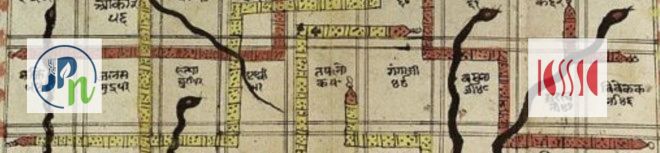
Chowka Bara, Handmade
Item

- Title (dcterms:title)
- Chowka Bara, Handmade
- Description (dcterms:description)
-
Chowka Bara, also known as Ashta Chamma, is a traditional Indian board game that dates back to ancient times. Although the exact place of origin and the period remains unknown, this boardgame has been popular in various places across India through generations. The game is played by two or four players using four cowrie shells and several tokens. The name “Chowka Bara” means “four eight,” which are the highest numbers a player can get from the cowrie shells. The game likely started in Andhra Pradesh, Telangana, or Karnataka. It is called 'Athha Pagdi' in Gujarat and 'Chiti' among the Baiga Community in Madhya Pradesh. In Karnataka, it is called “Chowkabara,” in Andhra Pradesh and Telangana, it is known as “Ashta Chamma,” and in Tamil Nadu, it is called “Daayam.” Each region has its own small changes to the rules, adding to the game’s rich variety. This game is known by various names in different languages and regions across India. t’s thought to be one of the cross-and-circle games, like Pachisi, Ashte Kashte, and Chaupar.
The Chowka Bara board always has the same number of tiles across and down, but the tiles don’t have to be square. The number of tiles varies, allowing for bigger boards and longer games. There is always an odd number of tiles so there can be a central tile. Each player uses one less token than the number of tiles on one side of the board. The goal is to get all of one’s tokens to the central tile first.
Variants: Among the Baiga Community in Madhya Pradesh, the game can be played by 2 3 or 4 players and each person is alloted 4 pices called khunti. 5 pieces of halved tamarind seeds are used as dice. The throw of the dice is called chiti. - Alternative Title (dcterms:alternative)
- Ashta Chamma, Daayam, Gatta Bara, Katte Mane, Chakaara, Pakidakali, Atthu, Kanna Kauri, Champool, Chomal Ishto, Kaangi Chaala, Kaudi Khela and Mach Kooki, Changa, Changa Po, Teri Chowk. Attha Pagdi, Chiti
- Rules (dcterms:instructionalMethod)
-
Playing the Game
Players use four cowrie shells as dice. When you throw the shells, you count how many land with the mouth up (value of 1) and how many land with the mouth down (value of 0). The possible values from a throw are:
– 1, 2, 3, 4 (called Chamma), and 8 (called Ashta).
If all shells land with the mouth down, it’s called Ashta and has a value of 8. If all shells land with the mouth up, it’s called Chamma and has a value of 4. Rolling a Chamma or Ashta gives you an extra turn.
Moving the Pawns: Players take turns to roll the cowrie shells and move their pawns based on the number rolled. The pawns move in an anti-clockwise direction on the outer squares and clockwise on the inner squares.
A pawn enters the board only when you roll a Chamma or Ashta.
Pawns can move into the inner squares only after they’ve completed a round of the outer squares and at least one opponent’s pawn is “killed” (landed on by another pawn).
If a pawn lands on a square occupied by an opponent’s pawn, the opponent’s pawn is sent back to the start, and the player gets an extra turn.
Winning the Game:The game is won when a player moves all their pawns into the central home square. Pawns can only enter the home after circling both the outer and inner squares.
Special Cases and Rules:Rolling a Chamma or Ashta gives you a bonus turn.
If a player rolls Chamma or Ashta three times in a row, they lose their turn.
If most of the tokens are off the board, rolling a Chamma or Ashta can bring some tokens back.
Cowrie Shell Values:-
3 inverted, 1 as is: Move 1 square
2 inverted, 2 as is: Move 2 squares
1 inverted, 3 as is: Move 3 squares
4 as is (Chamma): Move 4 squares
4 inverted (Ashta): Move 8 squares
In the larger board version (like 8×4=32), the rules remain the same but tokens of four distinct colors are used. - Creator (dcterms:creator)
- Ramsons Kreeda Pratisthan
- Source (dcterms:source)
- Ramsons Kala Pratisthan. Indian Traditional Boardgames - A Guide to the Art of Play. Ramsons Kala Pratisthan, 2016.
- Indian Boardgame Survey by R.K. Bhattacharya, Irving Finkel, L.N Soni
- Contributor (dcterms:contributor)
- Souvik Mukherjee and Adrija Mukherjee
- Rights (dcterms:rights)
- Creative Commons
- Format (dcterms:format)
- Boardgame on Cloth
- Medium (dcterms:medium)
- Boardgame on Silk embroidery
- References (dcterms:references)
- Chowka Bara: An ancient Indian board game
-
Indian Boardgame Survey by R.K. Bhattacharya, Irving Finkel, L.N Soni
- Spatial Coverage (dcterms:spatial)
- Mysore, Karnataka; In Kerala, the game is referred to as Pakidakali in Malayalam, whereas in Andhra Pradesh and Telangana, it is known as Ashta Chamma in Telugu. In Tamil Nadu, it is called Daayam or Thaayam in Tamil. In Madhya Pradesh, the game is called Atthu (अट्ठू) in Hindi, Kanna Kauri (कन्ना कौड़ी) in Jabalpur, and Chunga (चंगा) in Hindi. In Maharashtra, it is referred to as Champool or Kach Kangri in Marathi and Challas Aath in western Maharashtra. In Gujarat, the game goes by several names including Ahmedabad Baji, Chomal Ishto, Kaangi Chaala, and Mach Kooki. In Rajasthan, it is known as Changa Po, and in Madhya Pradesh, it is called Cheeta or Chanda. In Chhattisgarh, the game is referred to as Teri Chowk and Odisha it is called Kaudi Khela.
- Entered by (dcterms:accrualMethod)
- Adrija Mukherjee


- Media
 Chowka bara.jpg