
Mughal Pathan
Item

- Title (dcterms:title)
- Mughal Pathan
- Description (dcterms:description)
-
This game has been documented by Jatindra Mohan Datta in Belgharia, Kolkata near Dakshineshwar. According to Datta, the game is almost exclusive to the people who played this as it is found on a cemented floor of an old house. He also explains that this game is played like draughts. It is a two player game played by using 20 pieces. He also explains that a standard game of Mughal Pathan is also played with 16 pieces each and 19 pieces are used to play a variant of this game.
Mughal-Pathan has also been described by B. Das Gupta in Quarterly Journal of Bangiya Sahitya Parisat, under the title of Sola-guti Mangal Pata, in which reference is made to 16 pieces used by each player as well as to the wars between Mughals and Pathans in Bengal. Mughal-Pathan has also been described by B. Das-Gupta in Quarterly Journal of Bangiya Sahitya Parisat, under the title of Sola-guti Mangal Pata, in which reference is made to 16 pieces used by each player as well as to the wars between Mughals and Pathans in Bengal.
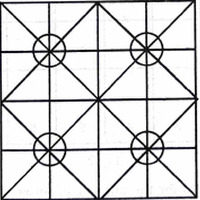
The board as seen in the diagram according to Datta, is used in playing several types of games, and he draws reference to the Bornean game of Rimoe described by Jacobson, the Ahtarah Guti of the United Provinces which is an 18-piece game described by Humphrey, Athara gutiala Teoraof the Central Provinces, also an 18-piece game described by H.C. Das Gupta, Lam Pusrior Sipahi Kat of the Teesta Valley an 18-piece game described by S.L. Hora and a new type of Bagh-Bandi or Tiger-play. - Alternative Title (dcterms:alternative)
- Athara Guti, Rimoe, Bagh Chal, Bagh Bandi, Tigers and Goats, Baghchakkar, Chakrachhal, Sher Bakr, Bagh Batti, Sher Bakar, Bagha Guti, Tagnor, Adu Puli Attam, Puli Meka, Ada Huli, Terhuchu, Kulaochal, Puli Judham, Atharah Guti Teora, Lam Pusri
- Rules (dcterms:instructionalMethod)
- 7x7 lines, intersecting to form a square. Diagonals are drawn in the four quadrants of the board. Two triangles, their apices intersecting the main board at opposite midpoints. The base of the triangle is bisected by a line drawn from the apex, and this line is bisected and intersects with the other two sides of the triangle. Twenty pieces per player, which begin on the points in the triangles and the first two rows of points in the square on the side closest to the player. Players alternate turns moving a piece to an empty adjacent spot along the lines of the board. A piece may capture an opponent's piece by hopping over it to an empty point on the opposite side of the opponent's piece along the lies of the board. Multiple captures are allowed. The player who captures all the opponent's pieces wins.
- Creator (dcterms:creator)
- Jatindra Mohan Datta
- Source (dcterms:source)
- ‘New and Rare Type of Mughal-Pathan Found Near Calcutta’ by Jatindra Mohan Datta in Sedentary Games of India eds. Nirbed Ray and Amitabha Ghosh
- Contributor (dcterms:contributor)
- Jatindra Mohan Datta
- Rights (dcterms:rights)
- Creative Commons
- Format (dcterms:format)
- Boardgames
- Medium (dcterms:medium)
- Boardgames on Text
- References (dcterms:references)
- Mughal Pathan- Digital Ludemi Project
- 'New and Rare Type of Mughal-Pathan Found Near Calcutta’ by Jatindra Mohan Datta in Sedentary Games of India eds.
- Spatial Coverage (dcterms:spatial)
- Kolkata
- Variants (dcterms:isVersionOf)
-
 Sher Bakar
-
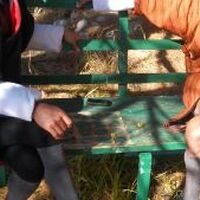 Taag dha Nor or Tagnor (Tiger and Cow)
-
 Bagh Chal, Kamakhya
-
 Mughal Pathan
-
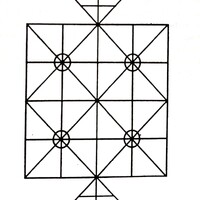 Bagh Bandi
-
 Atharagutiala Teora
-
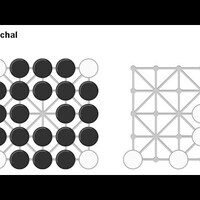 Kulaochal
-
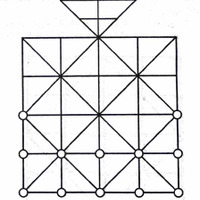 Bagh Chal (variant),Odisha
-
 Bagha Chheli ( Odisha)
-
 Lam Pusri or Sipahi Kat
-
 Baghchakkar or Chakrachal
-
 Bagh Batti
-
Mughal Pathan
- Entered by (dcterms:accrualMethod)
- Adrija Mukherjee