Sat Gol Game
Item

- Title (dcterms:title)
- Sat Gol Game
- Description (dcterms:description)
-
This game was recorded by Hem Chandra Das Gupta and the information was collected during one of his field visits to Gosalpur in the district of Jubulpur, in present Madhya Pradesh. According to Das Gupta concentric circles with three diameters are required for playing the game. It is a two player game played with four stones each kept in one circle. This game according to other sources, is similar to other variants of Mancala but the unique factor that it carries is the structure of the board. Elsewhere the board consists of a rectangular format with circles drawn on each side or played on a wooden board with holes made onto them, making it a two player game but here it is conformed into a circle hence giving it the name, Sat-Gol. Das Gupta further states in his essay that a careful study of this game shows the similarities with the Khasi game of Mawkarkatya, and a few other games allied to it. This game however, appears to be an extremely primitive form of the game prevalent in the Assam hills, Orissa and other places.
Murray misunderstood Das Gupta's description, writing that "the player captures the contents of the hole beyond, or if there is a sequence of empty holes, the contents of the first loaded hole". Das Gupta, however, stated: "[The move] continues until the player drops his last piece within a circle next to which there is an empty one and then he will be in possession of the pieces lying within the circle immediately next to the latter". - Alternative Title (dcterms:alternative)
- Mow korkatia / Longbeuacha (Assamese ), Sat-gol (Hindi), Ali Guli Mane (Kannada), Vai Lung Thlan (Mizo), Kanji guti (Odia), Khutka boia (Punjabi ), Pallanguzhi/ Pallankuli (Tamil), Vamana Guntalu (Telugu), Chenna Maaney (Tulu), Pachgarhwa (Urdu), Til-goti, Chal goti (Mundari), Sat Gharoa (Bihar), Bakri (Chattisgarh)
- Rules (dcterms:instructionalMethod)
-
Four pieces of stones are kept within each circle and, at the commencement of the play, one of the players takes out the 4 pieces of stones lying within one of the circles and begins dropping them successively within the different circles working anticlockwise, only one being dropped within one circle.
After the last piece had been dropped within one of the circles, the pieces lying within the next circle would be taken out and dropped successively within the different circles as before.
This continues until the player drops his last piece within a circle next to which there is an empty one and then he will be in possession of the pieces lying within the circle immediately next to the latter.
The play will be now begun by the other person who will take out the pieces lying within the circle next to the one from which the pieces had been removed by his adversary and proceed exactly like the previous player.
Whenever a player succeeds in capturing the pieces lying within a circle immediately next to any empty one, or comes to an empty circle with one or more empty circles next to it, he shall have to stop, and the play will be commenced by his adversary with the pieces lying within the first circle next to the one, the pieces from which have all been captured by the previous player, or within the circle lying immediately after the last empty circle, the movement being in all cases against the hands of the watch.
The play will go on in this way and the player who captures the larger number of pieces will be considered to be victorious.
- Creator (dcterms:creator)
- Hem Chandra Das Gupta
- Source (dcterms:source)
- 'A Few Types of Sedentary Games Prevalent In The Central Provinces’ by Hem Chandra Das Gupta in Sedentary Games of India eds. Nirbed Ray and Amitabha Ghosh
- Contributor (dcterms:contributor)
- Hem Chandra Das Gupta
- Rights (dcterms:rights)
- Creative Commons
- Format (dcterms:format)
- Boardgames
- Medium (dcterms:medium)
- Boardgames on Text
- References (dcterms:references)
- 'A Few Types of Sedentary Games Prevalent In The Central Provinces’ by Hem Chandra Das Gupta in Sedentary Games of India
- Sat Gol- Digital Ludemi Project
- Mancala Wiki- Sat Gol
- Spatial Coverage (dcterms:spatial)
- Madhya Pradesh
- Variants (dcterms:isVersionOf)
-
 Pachgharwa (five spaces/homes)
-
 Gud Phale
-
 Düzalé
-
 Kasadi
-
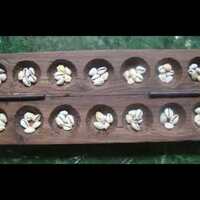 Interview with Professor Priya Sangameswaran (CSSSC): On Playing Pallanguzhi/Pallangudi in Palakkad
-
 Sat- Gharoa
-
 Mawkar Katiya
-
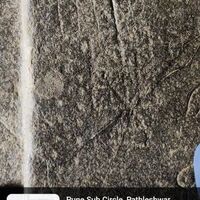 Mancala, Pataleshwar (7)
-
 Mancala
-
 Cenne Mane
-
 Khutki Boia
-
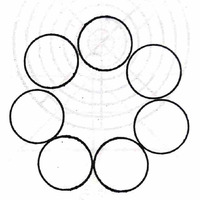 Sat Gol Game
-
Gud Phale
- Entered by (dcterms:accrualMethod)
- Adrija Mukherjee
- Notes (foaf:status)
- The essay mentions the Central Province which was the term used for the region of Madhya Pradesh during the British Period.
- Media
- Sat-gol