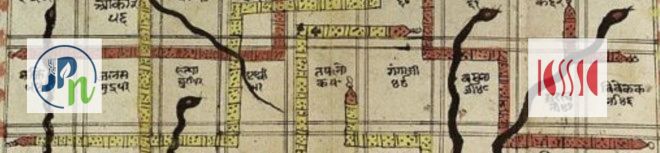
Sher Bakar
Item

- Title (dcterms:title)
- Sher Bakar
- Description (dcterms:description)
-
This game was documented by Hem Chandra Das Gupta while he was working on some of his own geological field work. The informants as he stated were Pathan or Pashtun who lived in Mianwali district of Punjab. He explained in his essay that the games he documented from the region were played by everyone in the area including both children and elders, and the games were found at times etched on stone slabs in common spaces. Similar looking boards have been commonly found both in incised patterns in various sites across India inside temples and also in other places.
The game of Bagh Chal has multiple variants all across South Asia. It is a two player hunt game played on an alquerque game board. The kind of alquerque board varies along with the number of tigers and goats as well. Bagh chal is also the national game of Nepal and this game is played either on a board but also at times etched on surface or boards drawn on plain surfaces are used to play this game as for this one. - Alternative Title (dcterms:alternative)
- Bagh Chal, Tigers and Goats, Tagnor, Aadu Huli Aata, Huli Gatta Puli Meka, Pulijudam, Aadu Puli Aatam. Bagh aur Bakri and Bagh Bandi
- Rules (dcterms:instructionalMethod)
-
Of the two persons necessary for this game, one is in possession of two pieces representing the tigers and the other of nineteen pieces representing the goats.
The latter pieces are placed within the circles marked in the image shown, 15 being equally divided among 3 circles while four are located in the fourth.
The two tigers are located at the ‘cross-points’ marked T.
As all types of tiger play the goats and the tiger may usually be moved from one cross point to that lying next to it, except in the case where a tiger may jump over a crosspoint with a goat on it and capture the goat, the cross-point next to the goat and in the same line being vacant.
Not more than one goat may be located on one cross-point, but more than one goat may be kept within the circles indicated in the image.
When the tiger-piece jumps over two or more goats within a circle and occupies the next vacant cross-point in the same line, not more than one goat may be captured.
One of the players tries to capture all the goat-pieces, and the other to checkmate the tiger-pieces one of which has to be checkmated immediately after the checkmating of the other.
- Creator (dcterms:creator)
- Hem Chandra Das Gupta
- Source (dcterms:source)
- ‘Few Types of Sedentary Games Prevalent In The Punjab’ by Hem Chandra Das Gupta in Sedentary Games of India eds. Nirbed Ray and Amitabha Ghosh
- Contributor (dcterms:contributor)
- Hem Chandra Das Gupta
- Rights (dcterms:rights)
- Creative Commons
- Format (dcterms:format)
- Boardgames
- Medium (dcterms:medium)
- Boardgames on text
- References (dcterms:references)
- Sher Bakar- Digital Ludemi Project
- ‘Few Types of Sedentary Games Prevalent In The Punjab’ by Hem Chandra Das Gupta in Sedentary Games of India
- Spatial Coverage (dcterms:spatial)
- Punjab (currently Pakistan)
- Variants (dcterms:isVersionOf)
-
 Sher Bakar
-
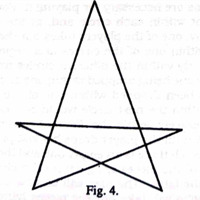 Kaooa
Kaooa
-
 Taag dha Nor or Tagnor (Tiger and Cow)
-
 Bagh Chal, Kamakhya
-
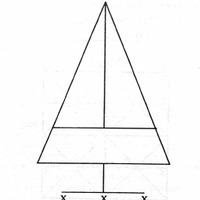 Bam Blang Beh Khla
-
 Bagha Guti
-
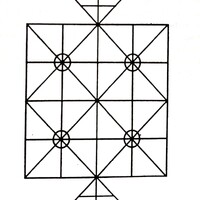 Bagh Bandi
-
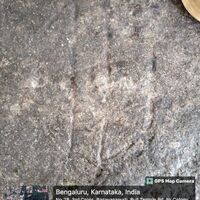 Bagh Chal, Bull Temple (4)
-
 Baghchal, Bull Temple (3)
-
 Baghchal, Handmade
- Entered by (dcterms:accrualMethod)
- Adrija Mukherjee
- Notes (foaf:status)
- This essay was written before the independence period and after the partition the region of Mianwali now falls under Pakistan.
- Tags (dcterms:conformsTo)
- Bagh Chal
- Tigers and Goats
- Sedentary Games
- Punjab, Pakistan
- Capture
- Two-player
- Hunt
- Shape: Square
- Media
- image.png