
Lau Kata Kati
Item

- Title (dcterms:title)
- Lau Kata Kati
- Description (dcterms:description)
-
This game was documented in an essay by Jantindra Mohan Datta. The games he described were played by locals of Howrah, Hooghly and 24-Parganas. According to Datta this and the other games in the essay are not indigenous in nature. The informant of these games belonged to Panihati. Datta also mentions that similar games were also common in other districts of Asansol, Burdwan, Midnapore, Ranaghat, Santipur, Khulna, and Barisal.
The game of Lau Kata Kati is a two player game. This game is similar to that of Kowwa Dunki and is a version of an Alquerque board. Lau Kata Kati is played with 9 pieces on each side, on a board in the shape of an hourglass. The board is also similar in layout to that of another game Felli from Morocco, but slightly larger, with the nine pieces of each player being arrayed in three rows. There are other similar variants of the structure of the board like Dash Guti, Nao Gutiya and others but the game pieces or the rules may differ from game to game. - Alternative Title (dcterms:alternative)
- Kowwu Dunki, Nao Gutiya
- Rules (dcterms:instructionalMethod)
-
Lau Kata Kati is played on an hourglass-shaped board. Lines indicate permitted moves. Each player selects 9 pieces or beads. The pieces are placed on the intersections of the triangle closets to the player, leaving only the middle point empty.
In turns, each player moves one piece along the marked lines to an adjacent empty point.
Players capture the pieces by jumping over an opponent’s piece and landing on an empty intersection beyond it, following the lines on the board.
Captures must be chained together if, upon jumping over an opponent’s piece and capturing it, the player is adjacent to another piece with an empty intersection beyond it.
Players must capture a piece if the move is available. If more than one capture is possible, the player can choose which capture to make.
Captured pieces are removed from the board.
To win the game, a player must capture all their opponent's pieces or form a position so that their opponent is unable to move.
If neither player can capture more pieces, the player who has the most pieces on the board wins.
- Creator (dcterms:creator)
- Jantindra Mohan Datta
- Source (dcterms:source)
- ‘A Few Types Of Sedentary Games Of Lower Bengal’ by Jatindra Mohan Datta in Sedentary Games of India eds. Nirbed Ray and Amitabha Ghosh
- Contributor (dcterms:contributor)
- Jantindra Mohan Datta
- Rights (dcterms:rights)
- Creative Commons
- Format (dcterms:format)
- Boardgames
- Medium (dcterms:medium)
- Boardgames on Text
- References (dcterms:references)
- ‘A Few Types Of Sedentary Games Of Lower Bengal’ by Jatindra Mohan Datta in Sedentary Games of India
- Lau Kata Kati- Bead game
- Lau kata kati- Play Online Solo Games
- Lau Kata Kati- Boards and Pieces
- Spatial Coverage (dcterms:spatial)
- Bengal
- Variants (dcterms:isVersionOf)
-
 Lau Kata Kati
-
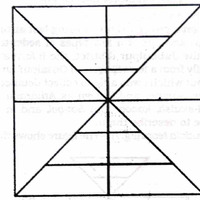 Dash Guti
-
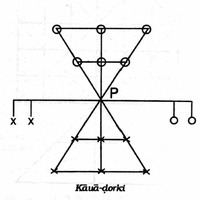 Kaua Dorki
-
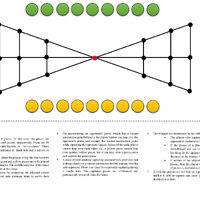 Lau Kata Kati: Downloadable Game
-
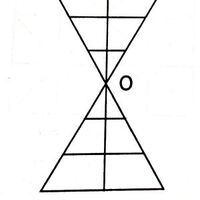 Nao- Gutiya
-
 Tuk-Tak
- Entered by (dcterms:accrualMethod)
- Adrija Mukherjee
- Notes (foaf:status)
- This essay was written before the Independence period of India. Thus some of the districts mentioned such as Vikrampore, Khulna and Barishal are situated in Bangladesh.