Cenne Mane
Item
- Title (dcterms:title)
- Cenne Mane
- Description (dcterms:description)
-
Cenne Mane is played all over Karnataka but it has different names and variants spreading across the region. According to Kulirani and Vijayendra and other scholars, Cenne Mane is itself a variant of the popular game of Mancala. The word chenne is a peculiar word in Tulu language. According to Verupakash et al. it is not used in regular conversation but it is associated with the names of the folk people as chenna, chenni, china, chennu, chennamma, chennappa, chinnappa etc. In Kannada the word chenne- means beautiful and attraction.
India has had many alternate names and variations in rules and strategies of the game. It is often played on a wooden board with depressions. Other times in some regions it is also played by drawing or cutting holes on the ground either on stone or slabs or even temporarily on soil. This game is played for long hours by women more than men and Cenne Mane is also played during the Ashada-Shravan months. It is a two player game, although some variants also mention three players or even one. The intention of winning the game depends on collecting maximum number of seeds or stones or pieces. The pieces are placed in the holes. In case of Cenne Mane, there are four seeds per pit. The game begins in an anti-clockwise direction. This game does not end in one round. There is a case of debts and borrowing that is also followed in some variants.
Cenne Mane is popularly known as Cenne Mane Ata. In the districts of nothern Karnataka it is also called Karu Baruva whereas in southern Karnataka it is known as Buleperga. There are other sub variants that are played like; Jodu Perga, Thara Thimbala, Hegge Thimbala, Mule Ata, Seenya Mukhya, Earns Ata, Arasa Ata and Sithata.
- Alternative Title (dcterms:alternative)
- Mow korkatia / Longbeuacha (Assamese ), Sat-gol (Hindi), Ali Guli Mane (Kannada), Vai Lung Thlan (Mizo), Kanji guti (Odia), Khutka boia (Punjabi ), Pallanguzhi/ Pallankuli (Tamil), Vamana Guntalu (Telugu), Chenna Maaney (Tulu), Pachgarhwa (Urdu), Til-goti, Chal goti (Mundari), Sat Gharoa (Bihar), Bakri (Chattisgarh)
- Rules (dcterms:instructionalMethod)
-
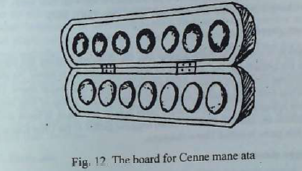
Cenne Mane Ata: There are seven pits on each players side. Players sit face to face with each other. This is a two player game. Each pit is filled with four seeds. The move of the first player begins by picking up all the seeds from one selected hole on their side and redistributing one seed each onto the next holes. After the last seed is placed and the players hands are empty they are required to pick again from the next hole and continue with the same move. This begins another lap and this goes on until the player reaches a hole that is completely empty. The opponent then takes their turn to move in a similar way. As the game proceeds, some of the holes will contain four seeds and some maybe less or more. Emphasis of capturing pieces is put on the hole with four seeds. The player captures the group of four during the course of the game and this move is called karu (four seeds). If the player misses to capture Karu and the seeds are placed as five then they miss their opportunity.
After the first game is over the second game is again drawn by placing the number of seeds won by each player on their side, filling as many holes as they can to continue the game. If a player has more seeds after filling their holes they keep it with them. The game hence continues.
Jodu Perga: Played in a similar way as Cenne Mane or Bule Perga, with one major difference being that a player can get the seeds from the hole opposite to them at a time when their hole has four seeds. This changes the strategy of the game.
Thara Thimbala: Played with the common rule of Cenne Mane with the difference being, the player captures the seeds of the hole next to the empty hole at the end of their lap. As the game continues some holes will accumulate four seeds and this is termed as Thara. If more seeds accumulate it is called Heggana Guthri.
Hegge Thimbata: Played similar to Karu Baruva but Thara captures are also included. So both the factor of the empty hole next to finishing of laps along with thara is allowed.
Mule Ata: Similar to Thara Thimbata but here the player at their turn picks up all the seeds from the corner hole of their own side. While distributing during the game, any corner hole with four seeds irrespective of sides is known as Kattida Mane. After kattida mane is made, the players are not supposed to put more seeds onto it. This continues and the player who has more kattida mane wins the game.
- Source (dcterms:source)
- Indian Boardgame Survey by R.K. Bhattacharya, Irving Finkel, L.N Soni
- Contributor (dcterms:contributor)
- B. Francis Kulirani and B.R Vijayendra
- Format (dcterms:format)
- Boardgames
- Medium (dcterms:medium)
- Boardgames on text
- References (dcterms:references)
- N.D.Verupakash and Rajashekhar. D. Benakanahalli INDEGENIOUS FOLK GAME, CHENNEMANE (ANDEYALA) AND ITS SOCIO-CULTURAL VALUES : Academic Sports Scholar (April ; 2014)
-
Claus, P. J. (1987). Cenne (Mancala) in Tuluva Myth and Cult. In P. J. Claus, J. Handoo, & D. Pattanayak (Ed.), Indian Folklore. II.
Mysore: Central Institute of Indian
Languages. - Spatial Coverage (dcterms:spatial)
- Karnataka
- Variants (dcterms:isVersionOf)
-
 Cenne Mane
-
 Khutki Boia
-
 Sat Gol Game
-
 Gud Phale
-
 Pachgharwa (five spaces/homes)
-
 Düzalé
-
 Kasadi
-
 Interview with Professor Priya Sangameswaran (CSSSC): On Playing Pallanguzhi/Pallangudi in Palakkad
-
 Rules of Pallankuzhi
-
 Sat- Gharoa
-
 Mawkar Katiya
-
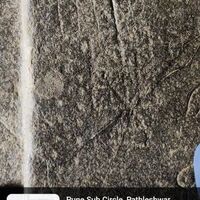 Mancala, Pataleshwar (7)
-
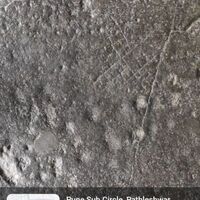 Mancala, Pataleshawar (8)
-
 Chaupar, Pataleshwar (3)
-
 Incomplete Mancala, Pataleshwar (6)
-
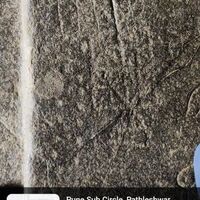 Baghchal, Pataleshwar (1)
-
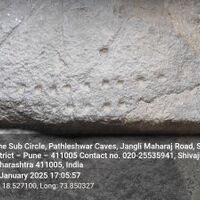 Mancala, Pataleshwar (4)
-
 Mancala, Pataleshwar (5)