Dashavatar Cards, Sawantwadi
Item
- Title (dcterms:title)
- Dashavatar Cards, Sawantwadi
- Description (dcterms:description)
-
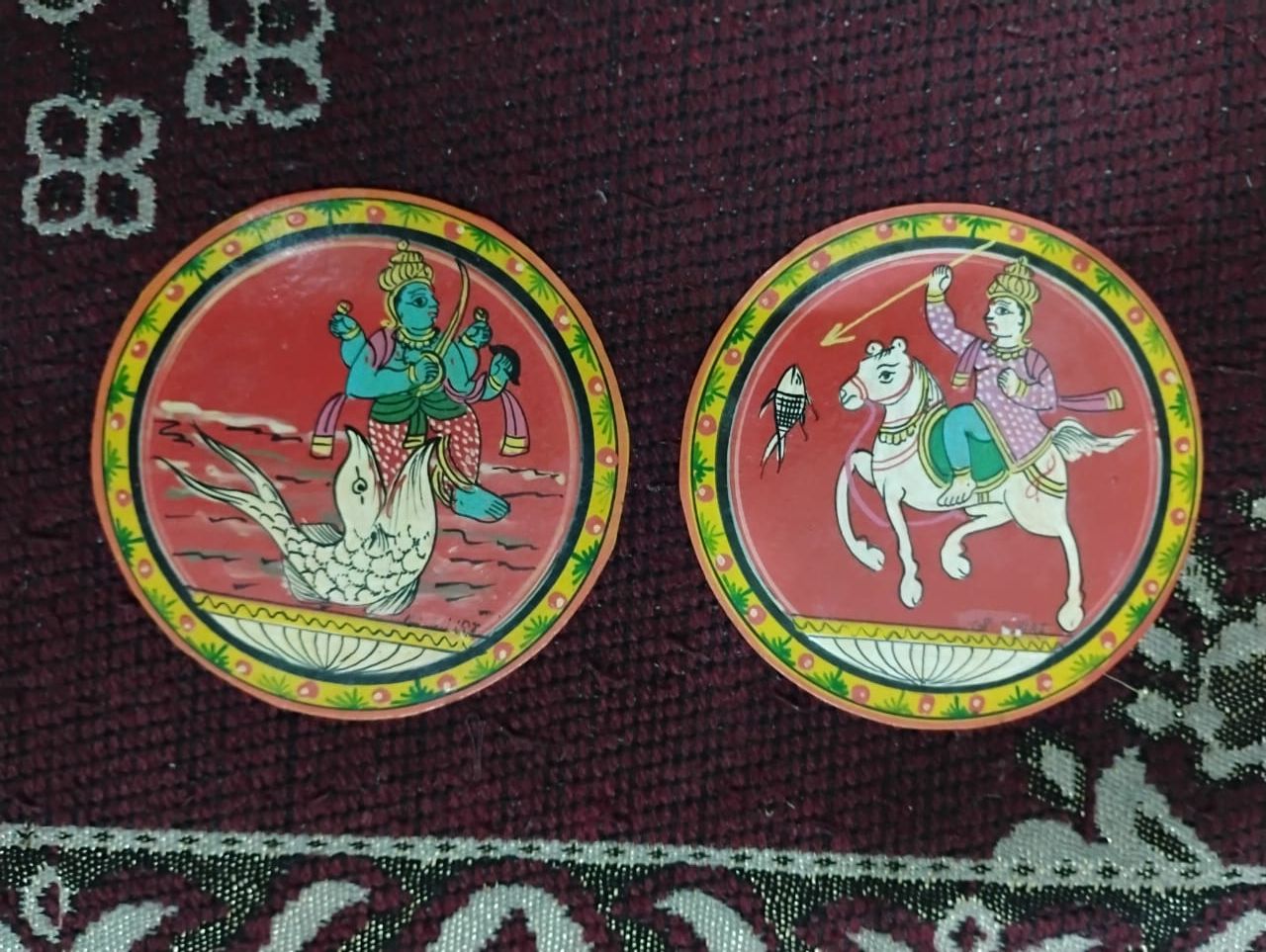
This image shows a variant of Dashavatar Ganjifa cards sourced from Sawantwadi of Maharashtra. During the 18th and 19th centuries, several regional schools of Ganjifa painting emerged in Sawantwadi. The revival of this craft began when H.H. Rajesaheb Shivramraje Bhonsle, during a visit to the Victoria and Albert Museum in London, noticed a label mentioning Sawantwadi Cards. He and his wife learned the art from the 80-year-old artist Pundalik Chitari, who at that time produced only two sets of Ganjifa per year. Motivated to preserve the tradition, they established Sawantwadi Lacquerwares to promote Ganjifa and lacquer art, with the goal of passing it on to younger generations.
Ganjifa is a product of transculturation in Mughal India or earlier. Ganjifa cards possibly originated in Islamic Persia or Mameluke Turkey and as far as their travel to India is relevant with the earliest sources of Ganjifa cards being mentioned in the Mughal archives by Gulbadan Begum (1523 - 1603), the sister of Emperor Humayun (1508-1556) and later, at length by Abul Fazl (c.a. 1565), the celebrated biographer of the Emperor Akbar (1556-1605) who describes the Ganjifa set at length. The Mughal set consists of the king of Delhi (or the emperor himself) as well as officials from different parts of the administration and other neighbouring states. The Mughal Ganjifa spread to multiple parts of South Asia but has since disappeared from all but a few places in India.
Ganjifa cards also developed into regional variants with the most popular being Dashavatar cards of the ten incarnations of Vishnu into a total card of 120 cards consisting of 10 suits. Each regional variant has their unique variant in play traditions or significance in their trump cards. In Sawantwadi, the ninth avatar is usually Buddha or Krishna whereas in Bengal and Odisha it is typically Jagannath. Hence the ten avatars of Vishnu: Matsya, Kurma, Varaha, Narasimha, Vamana, Parashurama, Rama, Krishna, Buddha, and Kalki consist of one king card, one vizier card and ten numeric cards consisting of one suit. The iconography of the cards also differs depending on the region and their artistic style which makes it significant to the local tradition of the area. The art style of painting the cards are influenced by the Ganjifa painting tradition of Andhra Pradesh. The dimension of the cards are much smaller than that of Bishnupur variant in Brngal or Mysore variant (chhad). The Sawantwadi Ganjifa is an ongoing culture of making cards with locally sourced artisans, supported by the royal family of Sawantwadi. Along with the making, the royal family is also involved in reviving the play traditions of the game. - Rules (dcterms:instructionalMethod)
- How to play Sawantwadi Dashavatar Cards
- Source (dcterms:source)
- Gautam Sen Memorial Boardgames Museum
- Contributor (dcterms:contributor)
- Gautam Sen Memorial Boardgames Museum
- Rights (dcterms:rights)
- Creative Commons
- Format (dcterms:format)
- Playing Cards
- References (dcterms:references)
- Sawantwadi Ganjifa- Sawantwadi Palace
- Sawantwadi Ganjifa- Google Arts and Culture
- Leyden, Rudolf Von. Ganjifa: Playing Cards of India. London: Victoria & Albert Museum, 1982.
- Medium (dcterms:medium)
- Playing Cards on board
- Spatial Coverage (dcterms:spatial)
- Sawantwadi, Maharashtra
- Variants (dcterms:isVersionOf)
-
 Download and Play Ganjifa
-
 Interview with Shraddha Bhonsle (Sawantwadi royal family)
-
 Interview with Dr Arunima Pati 20250217
-
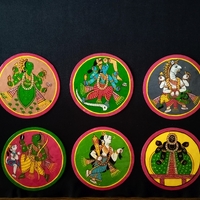 Dashavatar Cards
-
 Ramayana Ganjapa from Sonepur
-
 Playing Sawantwadi Ganjifa
-
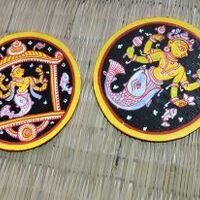 Raja (King) and Mantri (Vizier) card
-
 Dashavatar Ganjifa Card, Raghurajpur
-
 Mysore Chhad Ganjifa
-
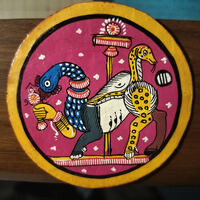 Navagunjara Ganjifa Card, Raghurajpur
- Media
 Sawantwadi cards