Pretwa
Item
- Title (dcterms:title)
- Pretwa
- Description (dcterms:description)
-
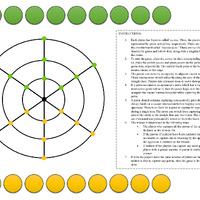
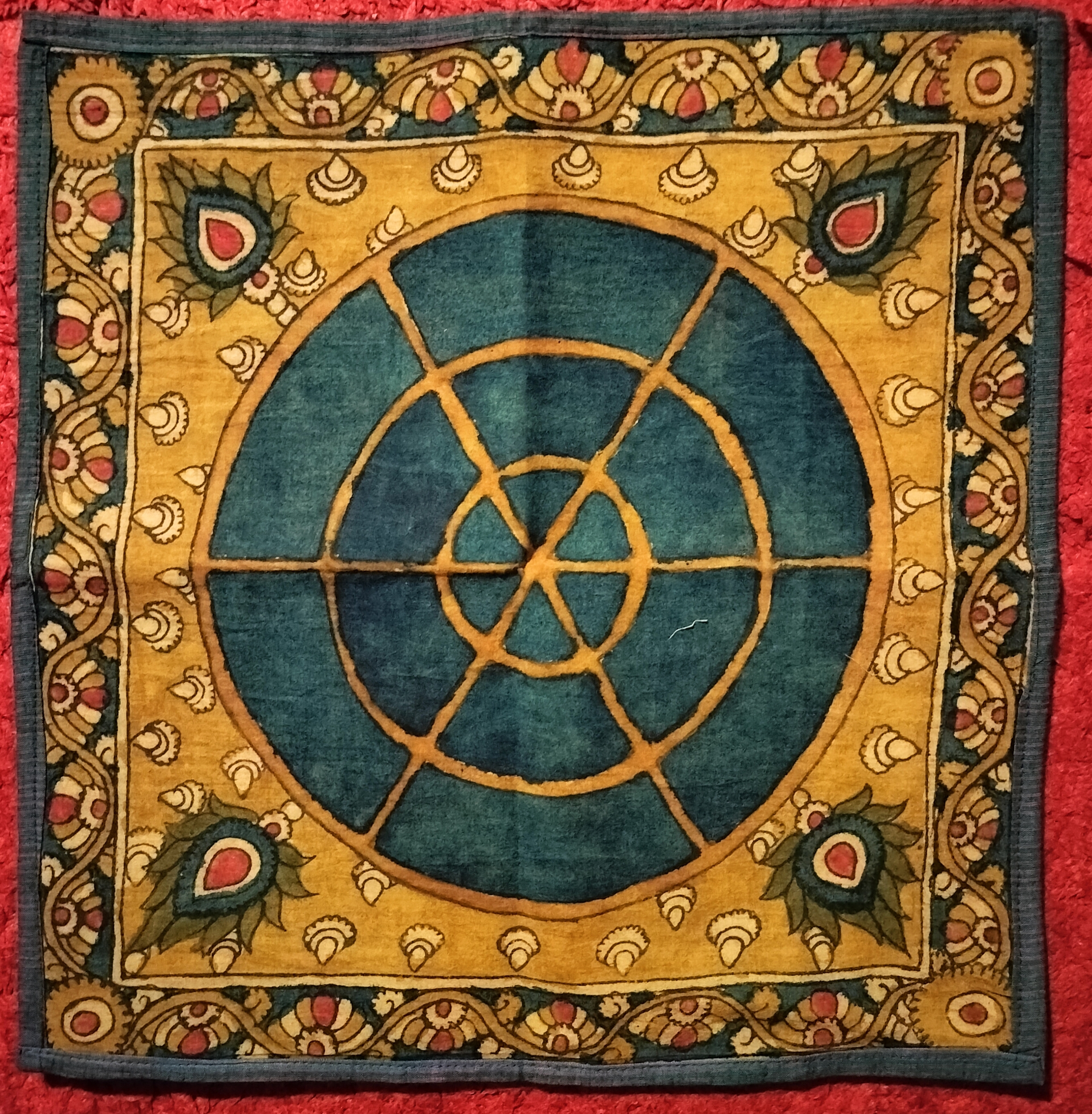
This attractive variant of alquerque, a forerunner of draughts, was played in Bihar in India. Its board is of three concentric circles joined by six spokes, the spokes not meeting in the middle. A variant with 7 concentric circles was also played. Though nowhere stated in Western accounts of the game, it is assumed that one piece may jump over another along a curved line. Two commentators write about this game in the early 20th century. Hem Chandra Dasgupta first observed this game being played by railway porters in Sealdah Station in Calcutta (now Kolkata). The porters belonged to Chhapra, Bihar. Eminent geologist, Sunder Lal Hora states that the game is also known in Ballia in Bihar where it is called Supaebeni. He notes that 'Prof. Das-Gupta has already explained the etimology of Pretoa (from Pretas or ghosts); while Supa-beni is the vernacular name of swallow, a bird which in its flights circles round and round as well as darts straight forwards. In the district of Arrah the game is known as Chakwa-boh and Nao-gutiya Chakwa-boh is the vernacular name used for a kind of diving bird, probably the Indian little Grebe —Podiceps ruficollis capensis (Salvaclori), which, when alarmed, dives under water and re-appears at unexpected points, so that there is no limit to the direction of its movements'. They also compare the game with Gol Ekuish from the erstwhile Central Provinces in India. Hora also notes some superstitions prevalent around the playing of Pretwa.
- Alternative Title (dcterms:alternative)
- Pretoa, Supaebeni
- Rules (dcterms:instructionalMethod)
-
Rules for Pretoa
1. Pretwa is played by two people on the board shown. Pieces are set out in a symmetrical pattern, leaving just one point empty. Players decide at random who will make the first move.
2. In his turn a player will move a piece one step along a marked line, to an adjacent empty point.
3. A piece captures a neighbouring enemy piece by jumping over it to land on the empty point beyond. If a capture is available, it must be made.
4. Having captured an enemy, a piece must make a further jump and capture from its new location if possible. Any number of captures can be chained in this way.
5. The game is won by the player who captures all the opponent's pieces. - Creator (dcterms:creator)
- Kreeda Kaushalya
- Source (dcterms:source)
- Gautam Sen Memorial Boardgames Museum
- Format (dcterms:format)
- Boardgames; alquerque
- Medium (dcterms:medium)
- Cloth
- References (dcterms:references)
-
Hora, Sunder Lal. “Sedentary Games of India.” In Sedentary Games Of India, edited by Nirbed Ray and Amitabha Ghosh. Kolkata: The Asiatic Society, 1999.
- Pretwa - Cyningistan.com