-
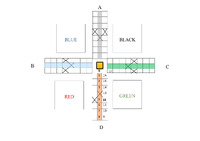 Chaupar: Downloadable Game
 This is a downloadable resource of a Chaupar Game one can download and play referring to the rules and using the given pieces.
-
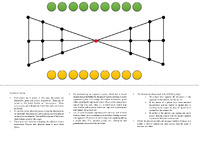 Lau Kata Kati: Downloadable Game
 This is a downloadable resource of a Lau Kata Kati Game one can download and play referring to the rules and using the given pieces.
-
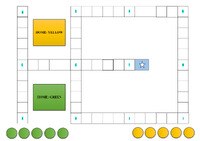 Panchi: Downloadable Game
 This is a downloadable resource of a Panchi Boardgame one can download and play referring to the rules and using the given pieces.
-
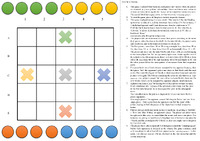 Chowka Bara : Downloadable Game
 This is a downloadable resource of a Chowka Bara Game one can download and play referring to the rules and using the given pieces.
-
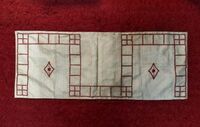 Daadu
Daadu Dadu is a game played by the Muslim Dawoodi Bohra community in Mumbai and Pune, India. Dadu is a 'Race Game' where two players race their respective pawns to complete the circuit. Each player gets 4 pawns of the same colour and keeps them in the place marked 'home'.
The movement of pawns is controlled by the throw of 5 cowrie shells.
-
 Tule Paid
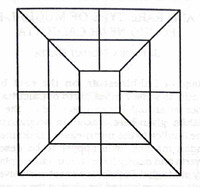
 The game Tule Paid has been documented by Charu Chandra Das Gupta from Jowai, Meghalaya. The game as explained, is played by two players and twelve pieces for each player.
The rule and diagram of this game is similar to a game
called Bara-guti-pait-pait prevalent in Vikrampur in East Bengal (currently Bangladesh) This shows that a similar game is prevalent in Bengal and Assam under different names, as stated by Das Gupta.
-
 Bam Blang Beh Khla
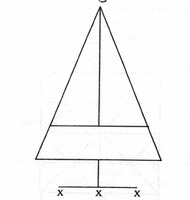
 This game has been documented by Charu Chandra Das Gupta from Jowai, Meghalaya.
This game is played by two men, one having the a piece marked O as mentioned in the text and the diagram
and called khla (tiger) and the other having three pieces
marked X and called blang ( goat). Thus altogether four
ballets are required in this game. By the name it is another form of a popular gam,e called Tigers and Goats or Bagh Chal which has many variants in South Asia with differences in the number of pieces used to play and also the designs of the boards changing the complete strategy of the game. According to Das Gupta this variant is unique as the structure of the board is different from what other alquerque boards look like.
-
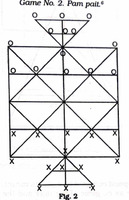 Pam Pait
 This game has been documented by Charu Chandra Das Gupta at Jowai in Meghalaya. He draws similarities of this two player game with another game called Ahtarah gutti and with other variants such as Lum Pusri
or Sipahi Kat in the Teesta Valley below Darjeeling in Ben- gal, Mughal-Pathan in the Twenty-four Parganas, Howrah and Hooghly districts in Bengal, and as Sholaguti Mangalapata in Vikrampur in East Bengal as far as the rules are seen.