-
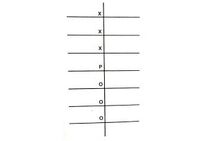 Unidentified Board
 This game was documented from Mawrynghkneng in Meghalaya, about sixteen miles or twenty six kilometers away from Shillong. This game as described by Charu Chandra Das Gupta could be played both as a solitaire game as well more than one. The rules of the game as explained by das Gupta has been mentioned below.
-
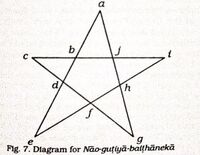 Nao- Gutiya- Baithaneka
 This game has been documented by Charu Chandra Das Gupta and the informant was a staff of the Nalanda Museum in Bihar. He explains it to be a kind of 'solitaire' as only one man plays it. He mentions the rules of the game as given below. He also finds similarity of this game with another game mentioned by another scholar, S.L Hora called Lam Turki which was played in Darjeeling, West Bengal. He mentions there are similarities but they are still played differently.
He also mentions in his essay that Humphries, had described a similar game named Kowwa Daud played in the (United Province?) which also had similarities with Nao- Gutiya- Baithaneka.
Apart from similarities what sets this aside from the rest as the name itself is Nao- Gutiya- Baithaneka or placing of the nine pieces but further movement of the pieces remain unclear.
-
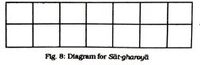 Sat- Gharoa
 This game has been documented by Charu Chandra Das Gupta and the information initially was given by a staff of the Nalanda Museum in Bihar. Although Das Gupta could not understand the rules of this particular game himself, he still describes it as a two player game. He further draws similarities of Sat-Gharoa with another game played by the Khasis (Meghalaya) and also in Orissa and Madras.
Although he does not mention the names of the similar game played in the other regions, there is a further note from the referenced text on this game by S.L Hora. He further mentions the rules of the game as described below.
He also mentions that the duration of this game is long and it does not require a lot of skill to play. But, during the end of the game when the pieces are comparatively lesser, the skills are required to empty the holes or the depressions to win the game.
-
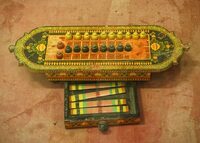 Tabul Phale
 This is an 18th c. indigenous board game of Goa called Tabul Phale, from the collection of Bagore Ki Haveli Museum in Udaipur. Its nomenclature derives from the wooden plank/board called ‘Tabul’ and the dicing sticks called ‘phale’. It is a two player game, with 12 pegs or pieces each of two different colours aligned on opposite sides of the board. The 4 sticks are painted and rounded on one side, and plain on the other.
The 12 x 4 squared board or ‘phale’ is vibrantly awash in colours of yellow, orange, and olive green, decorated with floral motifs on the side, known as ‘chitari’ art, named after the Chitari community, in Demani Village in Cuncolim, Goa that produces it today. They make all sorts of artefacts and toys using this art form such as advoli (traditional cutting board), paat (wooden stool), wooden vegetables and gunjifa cards.
-
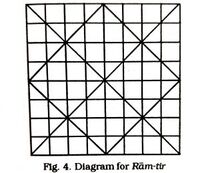 Ram- Tir from Bihar
 This game has been documented by Charu Chandra Das Gupta. The information has been provided by an individual who was a staff of the Nalanda Museum at Bihar at the time. According to Charu Chandra Das Gupta, there are eighty one cross points out of which the central point remains vacant. This game has similarities according to Charu Chandra Das Gupta, with a game called Ratti- Chitti- Bakri or (red white goats). The only point of difference is that the boards used for the two are not similar to one another. The meaning of the word Ram-Tir could not be explained by the informant.
-
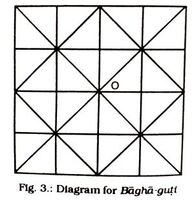 Bagha Guti
 This boardgame has been recorded by Charu Chandra Das Gupta and the information has been given by a staff of the Nalanda Museum in Bihar. This game as described by Das Gupta, is a two player game with twenty one pieces placed together in the central point marked as O and another piece placed as the 'tiger' which can be placed at any cross point at the starting of this game. He also states in his essay that this game is played differently than the games whose board look similar to this one.
-
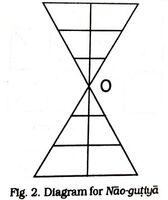 Nao- Gutiya
 This game was also recorded by Charu Chandra Das Gupta. The information was given to him by a staff of the Nalanda Museum as well as from another inhabitant of Kumrahar, a village near Patna. The game is called Nao-Gutiya or nine pieces and it is a two player game. Das Gupta in his essay draws similarities of this game with another boardgamec called Egara-guti or eleven pieces. Thgis game also has similarities with Lau-Kata Kati which is played in several parts of India.
-
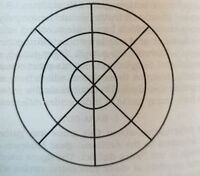 Bara- Guti
 The game of Bara Guti was recorded from an interview with an individual who was an office staff of the Archaeological Museum of Nalanda and he belonged to Patna. This board or the diagram of the board contains three concentric circles divided into eight parts by a diameter of four which meets at a twenty-four cross point. It is a two player game. According to Charu Chandra Das Gupta, there are similarities between this game and Pretwa/ Pretoa which is prevalent in Chapra district of Bihar and another game called Gol-Ekuish which was popular in the central province of Bihar. The difference is that in Gol-Ekuish, The board is of seven circles which is divided into six parts by a diameter of three and in case of Pretwa/Pretoa, the board consists of three circles divided into six parts by a diameter of three. At times even pretwa is played by twelve pieces or bara-guti, just the difference being that there are four circles instead of three in case of Bara-Guti.