-
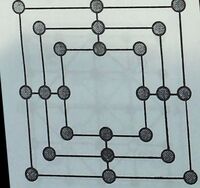 Sujjua
 This game was documented by Humphries on his visit to Baldewa which was a ruined Chandel temple a few miles away from the Karvi railway station. He recorded this board etched on one of the vertical slabs on the wall of the inner shrine. According to his speculations, the game was etched on stone and this stone was part of the floor before the stone was used for the construction of the temple. This game is called Sujjua. He explains that this game was played on a board of twenty four spaces and it is a two player game. The objective of the game is to match three pieces which he terms as ‘men’ in one row before the opponent can do it. When the game commences the board is clear and the players move alternately, each commencing by placing one of his own men on the board in any vacant place. After the first move, the player may either place another "man" on the board, or may move a piece already on it one space at a time in any direction, provided that the space to which he wishes to move it is vacant.
-
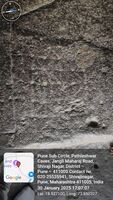 Bagh Chal, Pataleshwar (3)
 This Bagh Chal board has been recorded from the pillared halls of the main cave in the second row facing the main shrine of the cave site of Pataleshwar. Bagh Chal or Tigers and Goats is an ancient hunt game that has been popular in many regions of the world. The board of Bagh Chal is part of the alquerque family which traces its history to the Moors of Spain in their Libro de Los juegos (book of games) commissioned by Alfonso X in the 13th century. Although the rules were first found there, the history of alquerque goes further back to Egypt and to a name mentioned in the Kitab-al-Aghani (book of songs) as Kirkat or Al-Kirkat. Besides reference in literature similar game boards have been found both in practice amongst players in various communities as well as in archaeological sites. Bagh Chal has many variants, and is known by different names all over India, Nepal, Bhutan and other countries of South Asia. The structure of the board, the number of pieces and the variants in the rules may vary from place to place but the intention of winning remains the same. It is a two-player game where one individual represents the tiger and the other represents the goats. The number of tigers vary from one to even five in some games while the number of goats can be twenty or less or more depending on the structure of the board and the rules popular to the region.
Pataleshwar cave complex are a small group of five excavations, developed into a cave temple dedicated to Pataleshwar, God of the underworld or Shiva. This cave complex is ruggedly excavated and also bears resemblance with the Elephanta caves of Mumbai. The cave has unfinished murals on the sides and on the backside. There is a Nandi pavilion at the entrance of the cave which is circular. The inside of the main cave contains a pillared hall with a pradakshinapatha the way to go around the shrine. One side of the cave remains unfinished. This and other boardgames were documented on the floor of the cave.
-
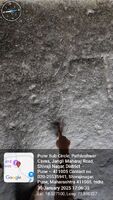 Chaupar, Pataleshwar (Incomplete)
 This is a documented image which showcase one arm of four found in a typical Chaupar board. Speculation could be that this was made in a trial and error process while games were being etched or excavated on the floors of the cave site. Or the measurement could have been incorrect leading to abandonment of this board mid-way. It could also have worn away with time and lack of preservation of etchings on the floor.
Pataleshwar cave complex are a small group of five excavations, developed into a cave temple dedicated to Pataleshwar, God of the underworld or Shiva. This cave complex is ruggedly excavated and also bears resemblance with the Elephanta caves of Mumbai. The cave has unfinished murals on the sides and on the backside. There is a Nandi pavilion at the entrance of the cave which is circular. The inside of the main cave contains a pillared hall with a pradakshinapatha the way to go around the shrine. One side of the cave remains unfinished. This and other boardgames were documented on the floor of the cave.
According to anthropologists K. Ravi and Jaya Sankar Rao and the classification of HJR Murray in his book, The History of Boardgames Other Than Chess, Chaupar is categorised as a Race Game. The first description of this game seems to have been written in the 16th century, when chaupar was a common gambling sport at the court of the Mughal emperor Akbar in Agra and Fatehpur Sikri. Abul Fazl describes how the game is played with sixteen pieces, three dice, and a “board” in the shape of a cross. It is typically a four-player game and the pieces belonging to each player is distinct from the others. It is played with four pieces and a throwing of either cowrie shells or two oblong dice. There are various terminologies used for the safe squares, or the throws which differs from one region to the other. For example, in Haryana the central home which is a flower here is called 'charon ka ghar'. Interestingly, it can be played by a throw of six cowrie shells or even more depending on the variant. As this etched board is from Maharashtra, it is difficult to understand the exact throw of dice or cowries used or the rules made to play this game.
-
 Mancala, Pataleshwar (7)
 This board was documented from Pataleshwar in the second row, right side of the pillared halls from the entrace facing the shrine in the cave. It is an eight-hole mancala. This mancala was found just beside a baghchal board. Although no overlap, they lie close to each other. It could indicate that both were not engraved at the same time. The holes or houses of the mancala board is not very deep. There are a total of eight mancalas recorded from the site of Pataleshwar. Pataleshwar cave complex are a small group of five excavations, developed into a cave temple dedicated to Pataleshwar, God of the underworld or Shiva. This cave complex is ruggedly excavated and also bears resemblance with the Elephanta caves of Mumbai. The cave has unfinished murals on the sides and on the backside. There is a Nandi pavilion at the entrance of the cave which is circular. The inside of the main cave contains a pillared hall with a pradakshinapatha the way to go around the shrine. One side of the cave remains unfinished. While there are abundant etched evidence of mancala spread all across Maharashtra, it has been stated by scholars and board game researchers that more recent memory of the existence of this game is absent from the region. Thus, the practice of playing the game or the regional variant belonging from this region is either lost or yet to be found.
The game of Mancala is considered to be one of the oldest games of the world, while its place of origin and the timeline is debatable. The earliest textual reference as stated by scholars comes from Kitab al-Aghani, or Book of Songs which does not directly mention mancala but refers to a similar game. These rows of cupules have been excavated in ancient sites like Jordan and many others including megalithic sites in India but their link as to being Mancala is debatable. This game has many variants all across the world and is popular in Africa, Asia, and parts of Eastern Europe. In India, Mancala is known by many names and the rules and variants of the game keep changing based on its region and according to the communities who play them. The number of holes in mancala differ along with the number of rows as well. In some variants the board is hand-drawn on a surface as circles with chalk or even cut holes on the soil to play the game. It is played with local seeds, stones or anything which is easily available as pieces to place inside the pits. The number of pieces per pit also vary from four to even twelve in some variants. This game is popularly a two-player game but some variants also show three players or even one in some case.
-
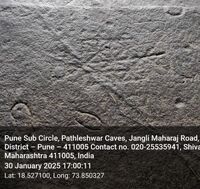 Baghchal, Pataleshwar (2)
 This etched or incised Bagh Chal board was recorded from the main cave complex on the second row of the pillared halls on the left side from the entrance facing the cave. Bagh Chal or Tigers and Goats is an ancient hunt game that has been popular in many regions of the world. The board of Bagh Chal is part of the alquerque family which traces its history to the Moors of Spain in their Libro de Los juegos (book of games) commissioned by Alfonso X in the 13th century. Although the rules were first found there, the history of alquerque goes further back to Egypt and to a name mentioned in the Kitab-al-Aghani (book of songs) as Kirkat or Al-Kirkat. Besides reference in literature similar game boards have been found both in practice amongst players in various communities as well as in archaeological sites. Bagh Chal has many variants, and is known by different names all over India, Nepal, Bhutan and other countries of South Asia. The structure of the board, the number of pieces and the variants in the rules may vary from place to place but the intention of winning remains the same. It is a two-player game where one individual represents the tiger and the other represents the goats. The number of tigers vary from one to even five in some games while the number of goats can be twenty or less or more depending on the structure of the board and the rules popular to the region.
Pataleshwar cave complex are a small group of five excavations, developed into a cave temple dedicated to Pataleshwar, God of the underworld or Shiva. This cave complex is ruggedly excavated and also bears resemblance with the Elephanta caves of Mumbai. The cave has unfinished murals on the sides and on the backside. There is a Nandi pavilion at the entrance of the cave which is circular. The inside of the main cave contains a pillared hall with a pradakshinapatha the way to go around the shrine. One side of the cave remains unfinished. This and other boardgames were documented on the floor of the cave.
-
 Mancala, Pataleshawar (8)
 Pataleshwar cave complex are a small group of five excavations, developed into a cave temple dedicated to Pataleshwar, God of the underworld or Shiva. This cave complex is ruggedly excavated and also bears resemblance with the Elephanta caves of Mumbai. The cave has unfinished murals on the sides and on the backside. There is a Nandi pavilion at the entrance of the cave which is circular. The inside of the main cave contains a pillared hall with a pradakshinapatha the way to go around the shrine. One side of the cave remains unfinished. This and other boardgames were documented on the floor of the cave. This is a documented image of an eight hole mancala but all the houses or holes are not in a condition where it could be played at the moment. Some of the holes have worn away with time. Interestingly there lies a Chaupar board just beside this mancala. There are a total of eight mancala graffiti boards recorded from Pataleshwar.
The game of Mancala is considered to be one of the oldest games of the world, while its place of origin and the timeline is debatable. The earliest textual reference as stated by scholars comes from Kitab al-Aghani, or Book of Songs which does not directly mention mancala but refers to a similar game. These rows of cupules have been excavated in ancient sites like Jordan and many others including megalithic sites in India but their link as to being Mancala is debatable. This game has many variants all across the world and is popular in Africa, Asia, and parts of Eastern Europe. In India, Mancala is known by many names and the rules and variants of the game keep changing based on its region and according to the communities who play them. The number of holes in mancala differ along with the number of rows as well. In some variants the board is hand-drawn on a surface as circles with chalk or even cut holes on the soil to play the game. It is played with local seeds, stones or anything which is easily available as pieces to place inside the pits. The number of pieces per pit also vary from four to even twelve in some variants. This game is popularly a two-player game but some variants also show three players or even one in some case.
While there are abundant etched evidence of mancala spread all across Maharashtra, it has been stated by scholars and board game researchers that more recent memory of the existence of this game is absent from the region. Thus, the practice of playing the game or the regional variant belonging from this region is either lost or yet to be found.
-
 Chaupar, Pataleshwar (3)
 This is a documented image which showcases a small etched or incised Chaupar board on the floor along with another board of Mancala, almost overlapping. Speculation could suggest that they were either made one after another or in different times. This particular Chaupar board is relatively smaller than the other boards recorded in the cave temple of Pataleshwar. This could draw speculations that this board was made in an attempt to document what boards they played in the past or this could have been part of their trial and error process of etching boardgames on the ground without precise measurements.
Pataleshwar cave complex are a small group of five excavations, developed into a cave temple dedicated to Pataleshwar, God of the underworld or Shiva. This cave complex is ruggedly excavated and also bears resemblance with the Elephanta caves of Mumbai. The cave has unfinished murals on the sides and on the backside. There is a Nandi pavilion at the entrance of the cave which is circular. The inside of the main cave contains a pillared hall with a pradakshinapatha the way to go around the shrine. One side of the cave remains unfinished. This and other boardgames were documented on the floor of the cave.
According to anthropologists K. Ravi and Jaya Sankar Rao and the classification of HJR Murray in his book, The History of Boardgames Other Than Chess, Chaupar is categorised as a Race Game. The first description of this game seems to have been written in the 16th century, when chaupar was a common gambling sport at the court of the Mughal emperor Akbar in Agra and Fatehpur Sikri. Abul Fazl describes how the game is played with sixteen pieces, three dice, and a “board” in the shape of a cross. It is typically a four-player game and the pieces belonging to each player is distinct from the others. It is played with four pieces and a throwing of either cowrie shells or two oblong dice. There are various terminologies used for the safe squares, or the throws which differs from one region to the other. For example, in Haryana the central home which is a flower here is called 'charon ka ghar'. Interestingly, it can be played by a throw of six cowrie shells or even more depending on the variant. As this etched board is from Maharashtra, it is difficult to understand the exact throw of dice or cowries used or the rules made to play this game.
-
 Incomplete Mancala, Pataleshwar (6)
 Pataleshwar cave complex are a small group of five excavations, developed into a cave temple dedicated to Pataleshwar, God of the underworld or Shiva. This cave complex is ruggedly excavated and also bears resemblance with the Elephanta caves of Mumbai. The cave has unfinished murals on the sides and on the backside. There is a Nandi pavilion at the entrance of the cave which is circular. The inside of the main cave contains a pillared hall with a pradakshinapatha the way to go around the shrine. One side of the cave remains unfinished. This image showcases three holes of Mancala incised and what looks like attempts in curating rows of mancala to make a board on the floor. Another speculation could be that there was a board which eroded with time and lack of preservation of the rock floors. There are a total of eight mancalas recorded from Pataleshwar along with other boardgames.
The game of Mancala is considered to be one of the oldest games of the world, while its place of origin and the timeline is debatable. The earliest textual reference as stated by scholars comes from Kitab al-Aghani, or Book of Songs which does not directly mention mancala but refers to a similar game. These rows of cupules have been excavated in ancient sites like Jordan and many others including megalithic sites in India but their link as to being Mancala is debatable. This game has many variants all across the world and is popular in Africa, Asia, and parts of Eastern Europe. In India, Mancala is known by many names and the rules and variants of the game keep changing based on its region and according to the communities who play them. The number of holes in mancala differ along with the number of rows as well. In some variants the board is hand-drawn on a surface as circles with chalk or even cut holes on the soil to play the game. It is played with local seeds, stones or anything which is easily available as pieces to place inside the pits. The number of pieces per pit also vary from four to even twelve in some variants. This game is popularly a two-player game but some variants also show three players or even one in some case.
: While there are abundant etched evidence of mancala spread all across Maharashtra, it has been stated by scholars and board game researchers that more recent memory of the existence of this game is absent from the region. Thus, the practice of playing the game or the regional variant belonging from this region is either lost or yet to be found.